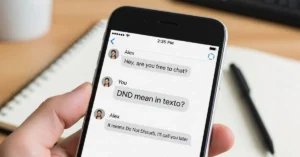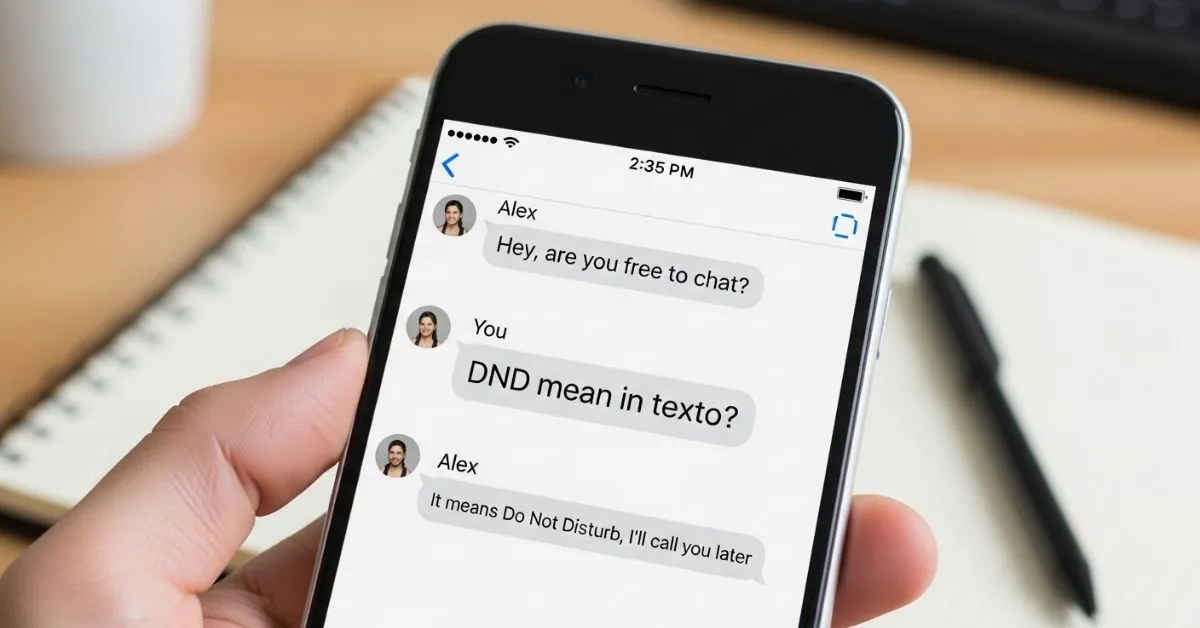
You’re texting someone, waiting for a reply, and suddenly the conversation goes quiet. Later they message back and say, “sorry, my phone was on dnd.”
If you’ve ever wondered what does DND mean in texting someone, you’re not alone.
This short abbreviation appears everywhere from WhatsApp chats and Instagram DMs to gaming conversations and work messages. It’s quick, simple, and widely used in modern texting culture.
But depending on the situation, it can mean slightly different things.
Let’s break it down in a simple and clear way so you always understand what someone means when they say DND.
Quick Answer
DND means “Do Not Disturb.”
It tells others that someone doesn’t want to receive messages, notifications, or interruptions right now.
What Does DND Mean in Texting Someone?
Full Form of DND
DND = Do Not Disturb
Plain-English Explanation
When someone says DND in texting, they usually mean they’re busy, focusing on something, sleeping, or temporarily unavailable.
It’s a polite way of saying:
“I can’t reply right now.”
Sometimes it also means their phone is on Do Not Disturb mode, which silences calls, messages, and notifications.
So if someone replies late and says “sorry, was dnd,” they’re simply explaining why they didn’t respond earlier.
Why People Use DND
People like using DND because it’s:
- quick and easy to type
- clear without sounding rude
- understood across apps and platforms
- helpful for setting boundaries
- useful during work, sleep, or study time
Instead of writing a long explanation, one short abbreviation explains everything.
Short Example Sentence
Bold Summary:
DND means “Do Not Disturb,” and it’s used to tell others someone is busy or not replying at the moment.
Where Is DND Commonly Used?
You’ll see DND in many digital places.
Common Platforms
- text messages (SMS, WhatsApp, iMessage)
- Instagram, Snapchat, and Facebook messages
- Discord and gaming chats
- online group chats
- work apps like Slack or Team
Because it’s simple and universal, DND works across almost every messaging platform.
Tone of DND
The tone of DND is usually:
- casual
- informal
- neutral
In work chats it may sound slightly professional, but it’s still considered informal slang.
Realistic Conversation Examples (Text Style)
Here are some natural examples of how DND appears in real texting conversations.
“sorry i didn’t reply earlier, my phone was on dnd”
“going dnd for a bit, talk later”
“he’s not ignoring you, he’s dnd”
“i put dnd on while studying”
“was gaming with dnd on”
“if i don’t answer i’m probably dnd”
“in a meeting rn, dnd”
“sleep mode = dnd”
“i’ll text you after dnd”
These examples reflect real texting culture short, simple, and direct.
The Simple Explanation Everyone’s Searching For
In modern texting, DND simply means someone doesn’t want to be disturbed right now.
It doesn’t mean they’re ignoring you.
It just means they’re temporarily unavailable.
When to Use and When Not to Use DND
Like most texting abbreviations, DND works best in the right situations.
✅ When to Use DND
- when you’re busy
- when focusing on work or study
- when explaining a late reply
- with friends, family, or coworkers
- in casual or semi-professional chats
❌ When Not to Use DND
- in formal emails
- in official documents
- when the other person might not understand slang
- during serious emotional conversations
Comparison Table
| Context | Example Phrase | Why It Works / Doesn’t |
| casual texting | “was dnd earlier” | short and clear |
| gaming chat | “putting dnd on” | common gamer slang |
| work chat | “i’m on dnd until 2pm” | clear and acceptable |
| formal email | “i was dnd” | too informal |
| serious talk | “don’t message me, dnd” | may sound cold |
Similar Slang Words or Alternatives
If you don’t want to use DND, there are several alternatives.
| Term | Meaning | When to Use |
| busy | currently occupied | general conversations |
| afk | away from keyboard | gaming chats |
| brb | be right back | short breaks |
| offline | not active | social media |
| muted | notifications turned off | group chats |
| unavailable | not reachable | semi-formal |
| focus mode | concentrating | work or study |
Each phrase works in different contexts, but DND remains one of the quickest and most widely understood.
FAQ: Common Questions About DND
1. What does DND mean in texting someone?
In texting, DND means “Do Not Disturb.” It shows the person is busy or has notifications turned off.
2. Is saying DND rude?
No. It’s generally polite and normal, especially when explaining why you couldn’t reply.
3. Does DND always refer to phone settings?
Not always. Sometimes it literally means Do Not Disturb mode, but it can also simply mean “I’m busy right now.”
4. Do people of all ages use DND?
Yes. Teens, adults, gamers, and professionals all use DND in daily digital communication.
5. Can DND be used in work chats?
Yes. Many people use it in Slack, Teams, or workplace chats as a status update.
6. Is DND the same as ignoring someone?
No. DND usually means temporary unavailability, not intentionally ignoring someone.
7. Can DND have other meanings?
Yes. In some contexts, DND can refer to Dungeons & Dragons, but in texting it usually means Do Not Disturb.
Final Thought
In today’s digital conversations, it’s a simple and respectful way to say “I’m busy right now.”
If someone is working, studying, gaming, sleeping, or just taking a break from notifications, DND helps them communicate their availability without sounding rude.
Understanding texting slang like DND makes online conversations smoother and prevents confusion. As messaging continues to grow, knowing these small abbreviations helps you communicate more clearly in everyday digital life.
Discover More Article
- POS Meaning in Gaming 🔍 Gaming Slang Guide for Beginners (2026)
- What Does ICL Mean In Text: Simple Meaning, Uses & Examples (2026)
- GNG Meaning Slang 📱 Why Everyone Is Using GNG in Chats (2026)

I’m a passionate language and meaning writer at meaningloop.com. With 3 years of experience, I explore meanings in text, abbreviations, niche slang, and love or relationship contexts. I help readers understand modern communication and express themselves clearly and confidently.