You’re texting someone, the conversation is flowing perfectly, and then suddenly they reply with NTY.
You stop for a moment, stare at your screen, and think:
“Wait… did they just refuse something? Did I say something wrong? What does this even mean?”
If this has ever happened to you trust me, you’re not alone.
The first time someone sent me NTY, I felt the same confusion. I kept re-reading the message, thinking maybe I missed context. A part of me wondered if it was slang I should already know.
Another part of me thought it might be something rude. But after a quick search (and a slightly embarrassing moment), I finally understood what it meant and everything suddenly made sense.
Short slang like NTY is super common in fast texting, but if you don’t know the meaning, it can feel awkward, confusing, or even stressful for a second. That’s exactly why learning these abbreviations helps you text confidently and avoid misunderstandings.
Quick Answer:
NTY means “No Thank You.”
It’s a polite, short, and casual way of declining something in texts, chats, or social media.
What Does NTY Mean in Text?
NTY stands for “No Thank You.”
People use it when they want to:
- Decline an offer
- Reject something politely
- Say no without sounding rude
- Keep conversations short and casual
It’s a very common part of modern texting language, especially among people who type fast or prefer short replies.
Example:
A: Want to join the game tonight?
B: nty, I’m tired 😅
This shows how friendly and simple the slang is it’s not rude, it’s not angry, it’s not emotional. It’s just a quick way of saying “no thanks.”
In short:
NTY = No Thank You = a polite way to decline.
Where Is NTY Commonly Used?
You’ll often see NTY in places where people type quickly and want to keep conversations short.
Common Platforms:
- Snapchat 👻 fast replies, casual tone
- TikTok comments 🎵 quick reactions
- Text messages / SMS
- Instagram DMs 📩
- Discord (especially gaming chats) 🕹️
- WhatsApp chats
- Group chats with friends
Tone of NTY:
- Casual
- Friendly
- Polite
- Non-serious
People use NTY when the conversation doesn’t require a full sentence or detailed reasoning. It fits perfectly in fast social-media culture.
Not recommended for formal, professional, or serious conversations.
Examples of NTY in Conversation
Here are realistic, natural examples of how NTY appears in chats:
A: wanna call now?
B: nty, I’m heading out
A: free for lunch??
B: nty, already ate 😅
A: I can send u the notes
B: nty bro, I got them
A: wanna try this filter?
B: lol nty it looks cursed 😂
A: game tonight?
B: nty, bad wifi today
A: u ok if I borrow ur jacket?
B: nty, need it today
A: wanna hear some drama??
B: haha nty I’m tired of ppl today
A: can u help me with this level?
B: nty, stuck in my own game rn 😭
A: come online?
B: nty, busy rn
These examples help you “feel” how NTY works naturally in real conversations.
When to Use and When Not to Use NTY
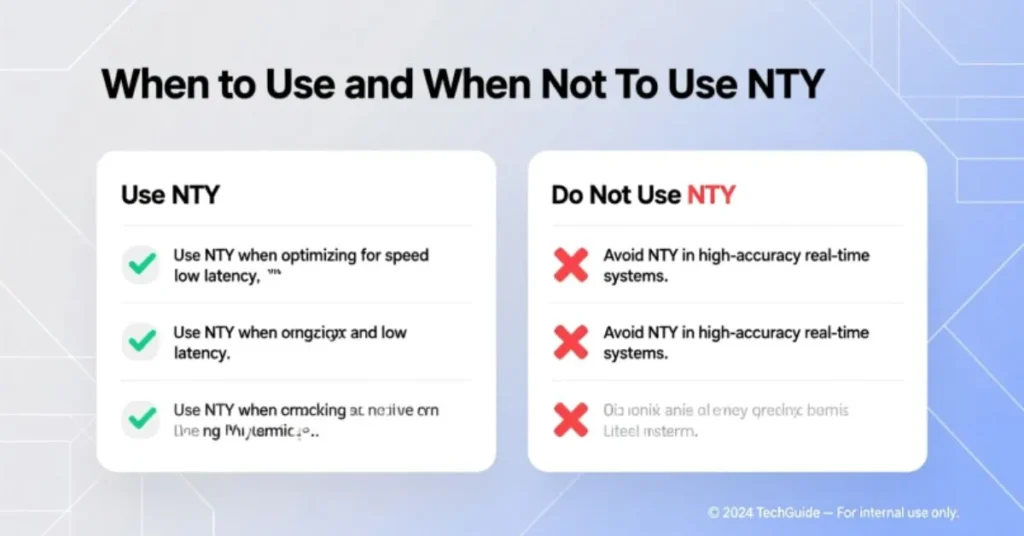
Using slang correctly is important. NTY is simple but context matters.
✅ When to Use NTY
Use NTY when:
- You want to decline casually
- You’re texting friends
- You’re in a group chat
- You’re rejecting an invitation politely
- You want to sound friendly
- You’re keeping messages short
- You’re gaming or chatting informally
- You don’t want to explain too much
❌ When NOT to Use NTY
Avoid NTY in:
- Work-related messages
- Emails
- Professional environments
- Conversations with teachers
- Serious emotional discussions
- Messages where tone might be misread
- Situations requiring respect or clarity
If the situation requires professionalism, avoid abbreviations completely.
Comparison Table
| Context | Example Phrase | Why It Works |
| Friend Chat | nty, not hungry rn 😄 | Casual and friendly |
| Gaming Chat | nty, not joining lobby | Short and efficient |
| Work Chat | No thank you, I prefer option A. | Professional tone required |
| Thank you, but I must decline. | Clear and polite | |
| School/Teacher | No thank you, I cannot participate. | Respectful and proper |
| Customer Support | No thank you, I’m not interested. | Formal and understandable |
This table helps you choose when NTY fits and when it doesn’t.
Similar Slang Words or Alternatives
Here are slang words with similar vibes or functions:
| Slang | Meaning | When to Use |
| TBH | To Be Honest | When stating your honest opinion |
| IDC | I Don’t Care | Casual chats, when expressing indifference |
| BRB | Be Right Back | When stepping away from the chat |
| FR | For Real | Agreeing, confirming something |
| RN | Right Now | Talking about time or urgency |
| OMG | Oh My God | Expressing shock or surprise |
| SMH | Shaking My Head | Showing disappointment or disbelief |
| IG | I Guess | When you’re unsure or agreeing lightly |
These help you understand similar slang that appears in everyday texting.
FAQs About “What Does NTY Mean in Text?”
Q1: Does NTY mean someone is upset?
No. NTY simply means “No Thank You.” It’s usually polite, casual, and not emotional.
Q2: Is NTY rude?
Not usually. It’s a friendly and soft way of declining something.
Q3: Can I use NTY in a professional message?
No. Use full sentences like “No, thank you” in formal situations.
Q4: What’s the difference between NO and NTY?
“No” is direct. “NTY” is softer, more polite, and more casual.
Q5: Is NTY flirty?
Not really. It’s neutral. It doesn’t have a romantic or flirty meaning.
Q6: What if someone uses NTY too often?
It usually means they prefer shorter replies, are busy, or want to keep conversations light.
Q7: Is NTY used worldwide?
Yes, it’s common in many English-speaking texting communities.
Conclusion
NTY is one of the simplest, clearest, and most polite abbreviations used in texting today. It helps you decline offers kindly without writing long messages. Now that you know its meaning, usage, examples, and alternatives, you can reply confidently without second-guessing or feeling confused.
Whenever someone sends you NTY, just remember:
They’re not annoyed. They’re not upset.
They’re simply saying “No, thank you” in a friendly, casual way.

I’m a meaning-focused writer at meaningloop.com. With 4 years of experience, I explore what words and phrases mean in text, rare and niche slang, social media and online culture, and love or relationships. I help readers clearly understand modern meanings in every context.