The first time I saw someone text “pu when you get here”, I paused for a second trying to figure out what it meant. Was it a typo? A new slang word? Or just another shortcut people use in fast conversations?
If you’ve ever felt confused by short texting abbreviations, you’re definitely not alone. Slang evolves quickly, especially on social media and messaging apps, and it can be tricky to keep up.
The good news is that this one is actually simple once you understand it.
Quick Answer:
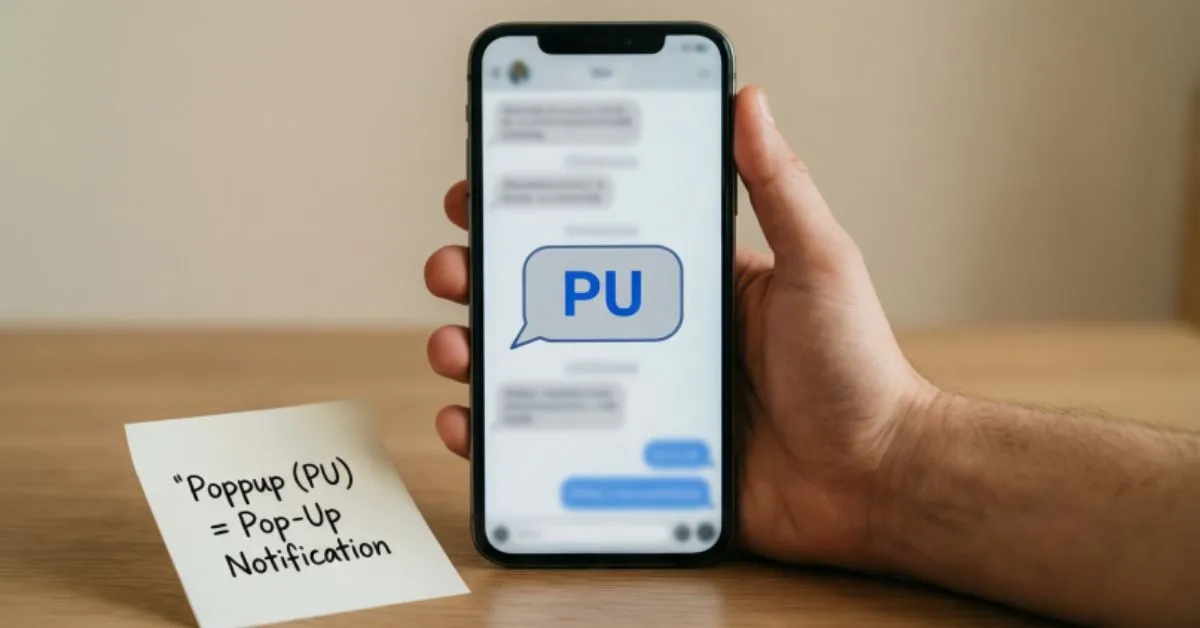
PU means “Pop Up.” It’s a casual and friendly way of saying “message me” or “contact me later.”
What Does Popup (PU) Mean in Text?
In texting and online chats, PU usually stands for “Pop Up.” People use it when they want someone to send them a message later, check in, or start a conversation when available.
It’s commonly used between friends and in informal conversations. Instead of writing a full sentence like “message me later,” someone might just say PU to keep things quick and simple.
Example:
“pu when you’re free”
This means “message me when you’re free.”
In short: PU = Pop Up = Message me later.
Where Is PU Commonly Used?
You’ll mostly see this slang in casual digital conversations, especially where people prefer quick replies.
Common places include:
- 📱 Text messages
- 👻 Snapchat chats
- 🎵 TikTok comments and DMs
- 💬 Instagram messages
- 🎮 Gaming chats
- 🧑🤝🧑 Friend group conversations
Tone: Casual, social-media–friendly, and informal.
PU is rarely used in professional communication. It fits best in friendly or relaxed conversations where short slang is normal.
Examples of PU in Conversation
A: hey i’m heading out now
B: ok pu when you get home
A: i’ll send the details later
B: pu when ready 👍
A: busy right now
B: no problem pu later
A: just finished class
B: nice pu when free
A: can’t talk rn
B: ok pu tonight
A: i’ll check after dinner
B: pu when done
A: gotta go
B: pu tomorrow 🙂
When to Use and When Not to Use PU
✅ When to Use
- Talking with friends
- Casual texting
- Social media chats
- Gaming conversations
- When you want someone to message later
❌ When Not to Use
- Work emails
- Professional chats
- School assignments
- Formal communication
- Urgent situations
| Context | Example Phrase | Why It Works |
| Friend Chat | No rush, pu later 😄 | Casual and friendly |
| Social Media | pu when online | Quick and natural |
| Work Chat | Take your time | Professional tone |
| Please review when available | Formal and clear |
Similar Slang Words or Alternatives
| Slang | Meaning | When to Use |
| HMU | Hit me up | Asking someone to message you |
| BRB | Be right back | Leaving briefly |
| TTYL | Talk to you later | Ending a conversation |
| MSG | Message | Short texting form |
| DM | Direct message | Social media chats |
| L8R | Later | Casual texting |
These alternatives work in similar situations where conversations are quick, informal, and friendly.
FAQs:
Does PU always mean pop up in texting?
Most of the time, yes. In casual messaging, PU usually means “pop up” or “message me.”
Is PU rude or polite?
It’s neutral and friendly, depending on the conversation tone.
Can PU be used on social media?
Yes it’s common on Snapchat, Instagram, and texting apps.
Is PU formal slang?
No. It’s informal texting slang.
Do people still use PU in texting?
Yes, especially among younger users and in casual chats.
Can PU mean something else?
In rare cases, PU could mean other things depending on context, but in texting it usually means pop up.
Conclusion
Text slang can feel confusing at first, but once you learn the meaning, it becomes part of everyday conversation. PU is just a simple way to ask someone to message later, making chats quicker and more relaxed.
If you’re texting friends, chatting on Snapchat, or messaging on social media, understanding small abbreviations like this helps you communicate more naturally online.
The next time someone says PU, you’ll know exactly what they mean and you can use it confidently too.
Summary
PU means “Pop Up,” a casual texting slang used to ask someone to message later or start a conversation when free.
Discover More Article

I’m a dedicated meaning and slang writer at meaningloop.com. With 5 years of experience, I explore meanings in text, abbreviations, niche and rare slang, and love or relationship contexts. I help readers clearly understand modern language and communicate effectively in every situation.