I still remember the first time I saw someone reply with “sms” in a chat. I stared at my screen for a good few seconds, wondering if I missed a joke or if it was some new internet code everyone knew except me. Was it sarcasm?
Was it slang? Or did I need Google again? If you’ve ever felt that same confusion while texting or scrolling social media, you’re in the right place. Text slang changes fast, and SMS is one of those terms that looks simple but can raise questions.
Let’s break it down in a clear, friendly way so you can use it confidently.
Quick Answer:
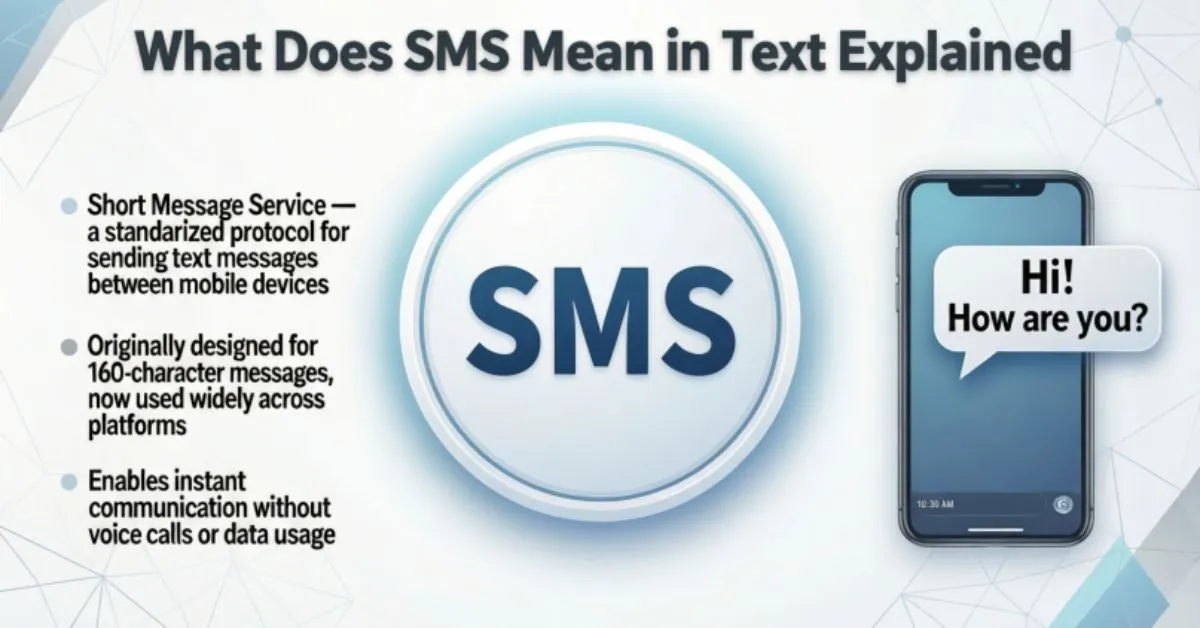
SMS means Short Message Service. It’s a neutral and technical way of referring to standard text messages sent through a mobile network.
What Does SMS Mean in Text?
SMS stands for Short Message Service. It’s the original technical term for the basic text messages we send and receive on mobile phones, usually limited to 160 characters.
In everyday texting, when someone says sms, they are usually talking about regular text messages, not WhatsApp, iMessage, or other internet-based chats. It’s less about emotions or tone and more about the method of communication.
Example sentence:
“I’ll send you the details via sms since my internet is slow.”
In short: SMS = Short Message Service = regular mobile text message.
Where Is SMS Commonly Used? 📱🌍
You’ll see or hear SMS used in several everyday situations, especially when people want to be specific about texting.
Common places include:
- 📩 Mobile texting – talking about regular phone messages
- 💼 Work communication – instructions like “send this via SMS”
- 🏦 Banks & services – OTPs, alerts, verification codes
- 📱 Apps & settings – notification options labeled SMS
- 🌐 Tech discussions – comparing SMS vs messaging apps
Tone & style:
- Mostly neutral and informational
- Slightly formal or technical
- Social-media–friendly, but not flirty
Unlike slang like lol or brb, sms doesn’t show emotion it just explains how a message is sent.
Examples of SMS in Conversation 💬
Here are some realistic chat-style examples to show how SMS is actually used:
A: can you send me the address
B: yeah, i’ll send it via sms
A: i didn’t get your message
B: check again, i sent an sms
A: whatsapp isn’t working right now
B: no worries, just text me on sms
A: how will i get the code
B: you’ll receive it by sms 📩
A: did you message mom
B: yes, i sent her an sms already
These examples show that sms is used more for clarity, not for jokes or flirting.
When to Use and When Not to Use SMS 🕓
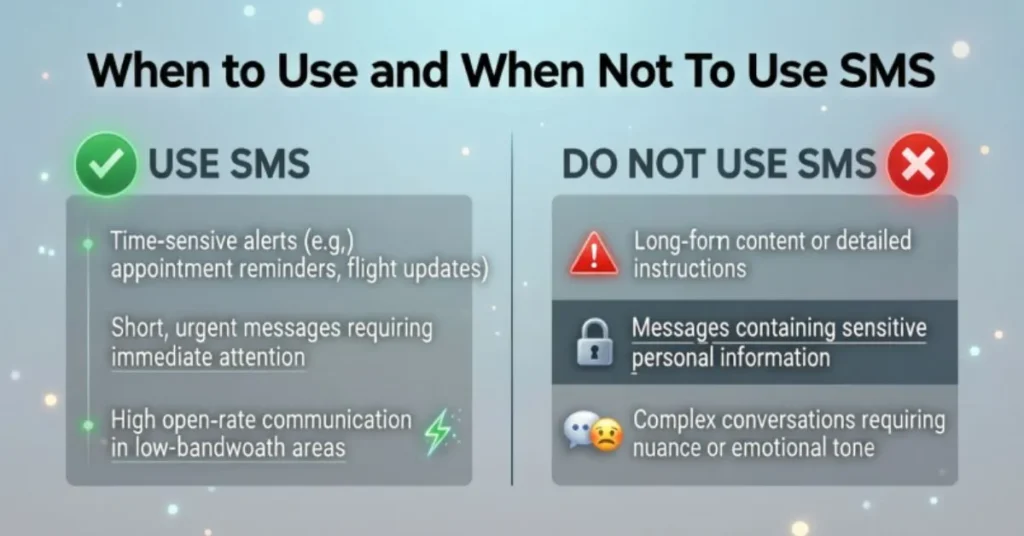
Knowing when to use the word SMS helps you sound natural and clear.
✅ When to Use SMS
- Talking about regular text messages
- Explaining how someone will receive information
- Tech-related or service-based conversations
- Professional or semi-formal chats
- When internet-based apps aren’t involved
❌ When Not to Use SMS
- Casual jokes or memes
- Emotional or flirty conversations
- Fast-paced slang-heavy chats
- When you clearly mean WhatsApp or DMs
- Informal social media banter
Context Comparison Table
| Context | Example Phrase | Why It Works |
| Friend Chat | “i’ll send it by sms 😄” | Casual clarity |
| Work Chat | “Please send the update via SMS.” | Professional |
| Customer Care | “You’ll receive a code by SMS.” | Clear & standard |
| “A confirmation will be sent via SMS.” | Formal & precise |
Similar Slang Words or Alternatives 🔄
Here are some common alternatives related to SMS, depending on context:
| Slang / Term | Meaning | When to Use |
| Text | Regular mobile message | Casual conversations |
| DM | Direct message | Social media chats |
| PM | Private message | Forums or platforms |
| Msg | Message | Informal texting |
| iMessage | Apple messaging service | iPhone users |
| Internet-based messaging | App-based chats |
Each term fits a slightly different situation, but SMS stays the most universal and technical.
Is SMS Casual, Formal, or Flirty? 🤔
SMS is best described as neutral.
- ✔️ Casual? Yes, in everyday explanations
- ✔️ Formal? Yes, especially in work or service contexts
- ❌ Flirty? Not at all
If someone wants to flirt, they’ll use emojis, tone-based slang, or playful words not sms. This term is about function, not feelings.
Why Do People Still Say SMS in 2026? 📲
With so many apps available, you might wonder why SMS is still relevant. The reason is universality.
- Works without internet
- Supported by all mobile phones
- Used by banks, schools, and companies
- Clear distinction from app-based messages
Even today, SMS remains the fallback when data fails or verification is needed.
Common Misunderstandings About SMS ❌
Let’s clear up a few myths:
- ❌ SMS does NOT mean “send me something”
- ❌ It’s not slang for “sorry” or “same message sent”
- ❌ It’s not a reaction word like lol
It almost always refers to Short Message Service unless clearly stated otherwise.
FAQs
What does SMS stand for in texting?
SMS stands for Short Message Service, meaning standard mobile text messages.
Is SMS the same as texting?
Yes. SMS is the technical term for texting through a mobile network.
Is SMS slang?
Not really. It’s more of a technical abbreviation than casual slang.
Can SMS be used on social media?
Yes, but usually only when explaining how a message is sent, not for fun.
Is SMS formal or informal?
It works in both, but leans slightly formal or neutral.
Does SMS require internet?
No. SMS works through your mobile network, not internet data.
Final Thoughts ✨
Understanding what SMS means in text makes everyday communication much clearer. It’s not trendy slang or flirty code it’s a reliable, universal term that simply explains how a message is delivered.
If you’re texting friends, dealing with work, or receiving verification codes, knowing when and how to use SMS helps you sound informed and confident. Next time you see it pop up in a message or setting, you’ll know exactly what it means no confusion, no guessing.
Discover More Article
TMB Meaning in Texting: What It Really Stands For 💬(2026)
💡NTY in Texting: What It Really Means (2026)
BTW Meaning in Text: What It Really Stands For (2026)

I’m a dedicated meaning and slang writer at meaningloop.com. With 5 years of experience, I explore meanings in text, abbreviations, niche and rare slang, and love or relationship contexts. I help readers clearly understand modern language and communicate effectively in every situation.